Foundation help for Wylie homes
Foundation Repair in Wylie
Schedule a foundation and drainage evaluation. Book Now
Foundation help for Wylie homes
Schedule a foundation and drainage evaluation. Book Now
Wylie includes established neighborhoods, newer residential growth, lake-influenced terrain, and properties with varied drainage conditions. Concrete slab homes may react to seasonal moisture changes, while lots with slopes, fill, or concentrated runoff can develop erosion and uneven soil support.
Wylie's growth spread quickly east of Lake Lavon, and its mix of newer subdivisions and older farmhouse-era properties means no two evaluations look quite the same.
Plano Foundation Repair reviews the full pattern of movement around the property. We examine cracks, floors, doors, exterior masonry, slab edges, grading, roof runoff, low spots, soil loss, irrigation, and nearby vegetation. Our services in Wylie include foundation stabilization, slab repair, inspections, crack repair, drainage correction, and soil stabilization. Reach out to talk through the signs you have noticed.
Wylie combines an older core with a very large amount of recent growth, and the two behave differently. The original downtown area has genuinely old housing, some of it on pier and beam, dating from when Wylie was a farming town and one of the ten cities that founded the North Texas Municipal Water District in 1951. Surrounding that core, the city expanded dramatically through the 2000s with conventional and post-tension slab subdivisions.
Proximity to Lavon Lake is the more distinctive factor. Land near the lake and the creek arms feeding it has a more variable soil profile than open prairie: alluvial deposits, changing depth to firm bearing, and in places a higher water table. Piers on those lots sometimes need to go noticeably deeper before they meet resistance, and it is not unusual for depth to vary substantially between corners of the same house. That is exactly why the price per additional foot or per additional point belongs in the written proposal rather than being settled after the crew has started.
Wylie sits on the same Blackland Prairie clay as the rest of Collin County, so the underlying shrink and swell behavior is familiar. What changes near the lake is how deep you have to go to get past it.
Older homes near the historic core, some on pier and beam. Crawlspace access makes diagnosis more direct and repairs less disruptive.
The bulk of the city. Conventional and post-tension slabs now reaching the age where first movement appears.
Alluvial deposits and changing bearing depth near the lake and creek arms. Pier depth can differ markedly corner to corner.
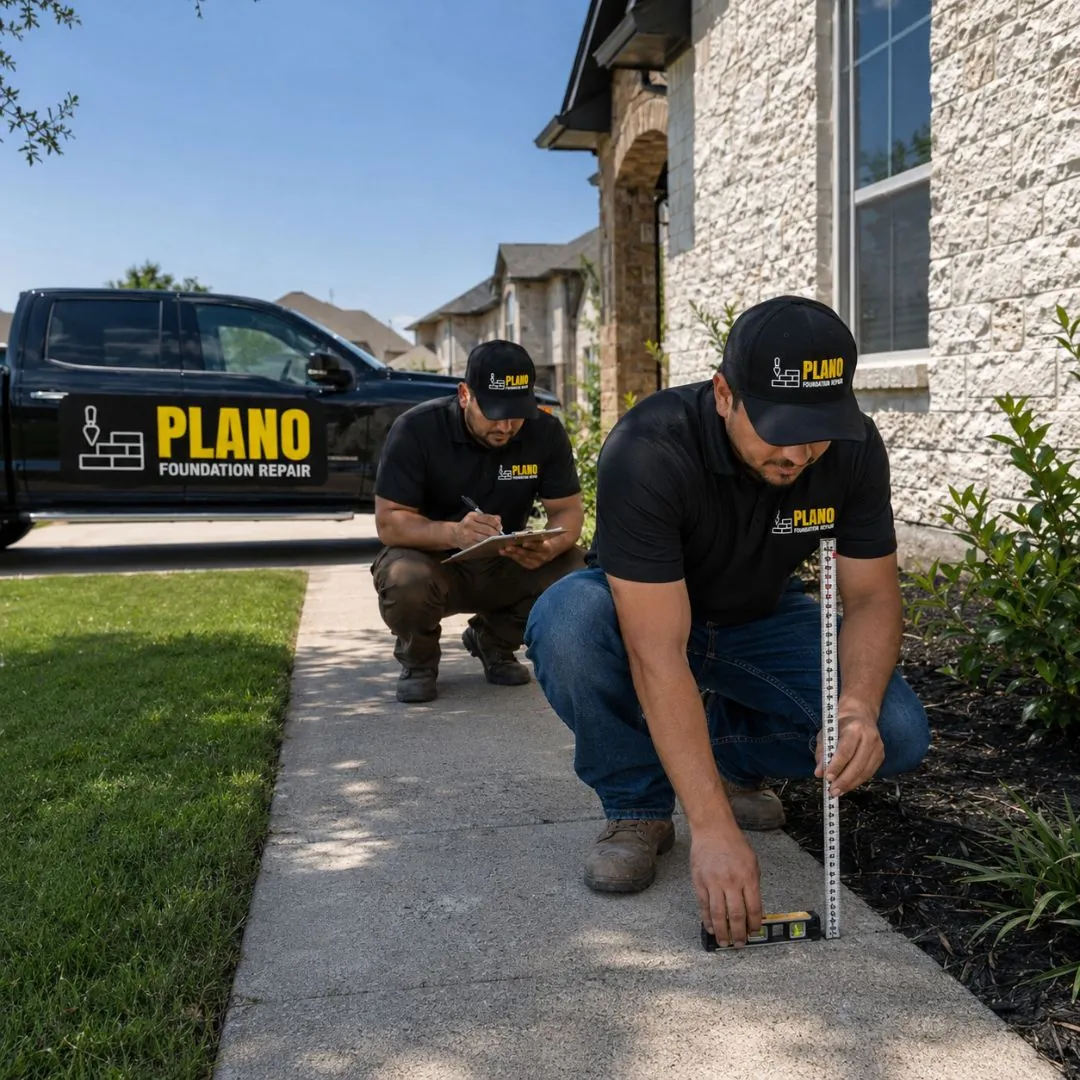
We evaluate how runoff crosses the lot and whether grading, hardscape, or erosion is creating uneven moisture near the foundation.
Settlement patterns, structural loads, access, support locations, and adjustment limits are considered before repairs are proposed.
We distinguish between possible shrinkage, material movement, water entry, and structural settlement before discussing treatment.
Drainage improvements and soil care are discussed when they may reduce continued stress after structural stabilization.
We serve homes and properties throughout Wylie. Arrange an appointment through us.
It affects how the repair is engineered more than whether problems occur. Land near the lake and its creek arms has a more variable soil profile, with alluvial deposits and changing depth to firm bearing. Piers may need to go deeper than on open prairie, and depth can vary between corners of the same house, which makes the per-foot pricing in your proposal more important than usual.
Because it genuinely does here. Piers are driven until the pressure reading shows firm bearing, and on variable soil that point differs from one location to the next. An honest proposal gives a projected depth plus a stated price per additional foot or point. A quote with a fixed depth and no variance clause is either optimistic or has padding built in.
Generally easier, if they are pier and beam. Crawlspace access means a crew can see and photograph the actual problem rather than inferring it, and leveling by adjusting shims and pads is less invasive and often less expensive than slab underpinning. Moisture control underneath matters more on those homes than it does on a slab.
Long enough that it shaped the region's infrastructure. The Blackland Prairie clay under Collin County is the Texas state soil and is classified as having very high shrink and swell potential. Wylie was one of the ten original member cities of the regional water district formed in 1951, and managing water in this area has been a long-running concern ever since.
Get practical guidance for cracks, foundation movement, erosion, or water collecting near your Wylie home. One quick call is usually all it takes.
Quick, simple, and no obligation