Serving Garland foundation needs
Foundation Repair in Garland
Schedule an evaluation for your home's foundation type. Book Now
Serving Garland foundation needs
Schedule an evaluation for your home's foundation type. Book Now
Garland has a broad mix of housing ages and construction styles, including slab homes, older pier and beam properties, remodeled houses, and additions built under different conditions. Foundation symptoms can result from soil movement, deteriorated supports, drainage issues, plumbing history, erosion, or structural changes made over time.
Garland's older housing stock, much of it mid-century slab and pier and beam near downtown, has been riding the clay's swell-and-shrink cycle for sixty years or more.
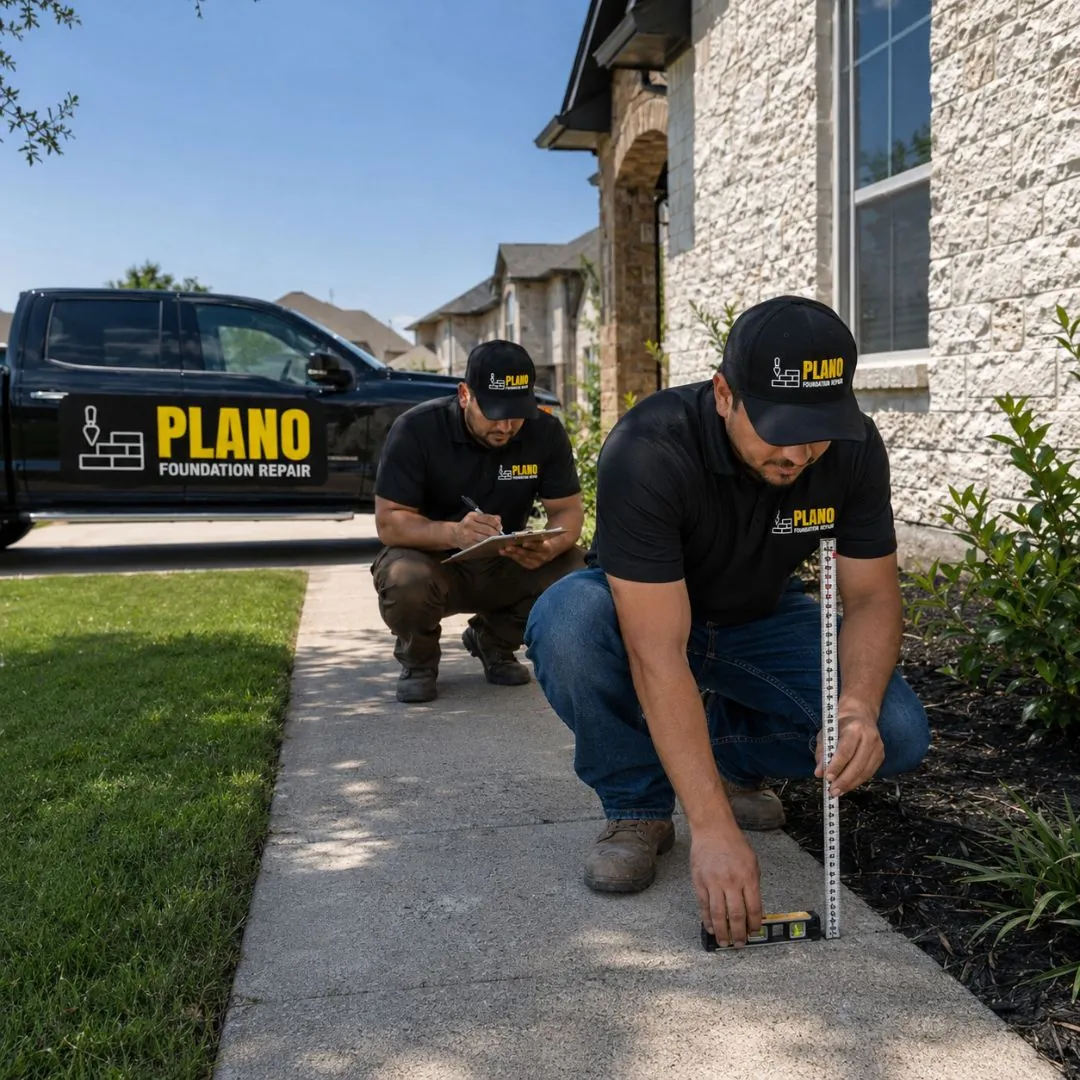
Plano Foundation Repair tailors the evaluation to the property. For slab homes, we review settlement patterns, masonry, floors, openings, and drainage. For pier and beam homes, accessible crawlspace supports, framing, bearing points, shims, and moisture conditions may also be inspected. We provide foundation repair, inspections, crack repair, drainage correction, and soil stabilization throughout Garland. Reach out to schedule service.
Garland is one of the older and larger cities we serve, and its housing stock reflects that. A great deal of the city was built through the 1950s, 1960s, and 1970s, with pockets of genuinely older housing near the original town center that sit on pier and beam rather than slab. Garland was also one of the ten original member cities of the North Texas Municipal Water District in 1951, which gives a sense of how long these neighborhoods have been established.
Housing age drives the most useful diagnostic insight here, and it mirrors Richardson. Homes from that era have original cast iron drain lines running beneath the slab, and those lines are now well beyond their expected service life. A corroded, leaking line saturates clay in one localized area and produces movement that looks exactly like ordinary soil settlement. Underpinning without addressing the leak means the soil keeps getting wet. A static test before setting the scope is frequently the most valuable few hundred dollars spent on a Garland project.
The city drains toward Duck Creek, Rowlett Creek, and Spring Creek, and decades of established tree canopy mean large root systems close to foundations in most older neighborhoods. Grading that worked when these homes were new has often settled or been altered by additions, patios, and landscaping over sixty years.
Cast iron from the 1950s to 1970s is past service life. A static test before piering regularly changes the diagnosis in this city.
Older areas near the original town center include crawlspace construction, which is repaired very differently from slab.
Additions, patios, and landscaping have altered original drainage on most older lots. Often the cheapest meaningful fix.

We use different inspection and repair methods for each foundation type rather than treating them as interchangeable.
Past remodeling, additions, plumbing work, aging wood, previous repairs, and changing drainage can all affect the current condition.
Standing water, negative grading, clogged drainage, roof discharge, and erosion are reviewed when they may affect support.
We help separate structural stabilization, drainage correction, specialist evaluation, and cosmetic restoration.
Our team evaluates homes and properties across Garland. Reach us through us.
Because of when these homes were built. Mid-century construction used cast iron drain lines under the slab, and they are now past their service life. A leak saturates soil in one spot and creates movement identical in appearance to settlement. Piering without fixing the leak addresses the symptom while the cause continues, and the movement returns.
Look for a crawlspace access panel or vents around the base of the exterior walls, which indicate pier and beam. A slab typically sits close to grade with no vents and no access hatch. Older neighborhoods near the original town center are more likely to be crawlspace construction, while most of the mid-century growth is slab.
Almost never. Concrete does not simply expire, and many mid-century slabs here are still performing well. What changes over time is the surrounding conditions: plumbing corrodes, trees mature, and grading shifts. Repair addresses those factors and restores support, and full replacement is extremely rare.
Sometimes, where movement is recent and modest and there is a clear water problem driving it. On a Garland lot where sixty years of additions and landscaping have reversed the original grade, correcting that can stabilize things. Where a section has already dropped meaningfully, drainage work protects the repair but will not lift what has settled.
Whether your Garland property has a slab or crawlspace, start with an evaluation suited to its construction. One quick call is usually all it takes.
Quick, simple, and no obligation