Foundation service across Frisco
Foundation Repair in Frisco
Tell us what has changed around your property.
Foundation service across Frisco
Tell us what has changed around your property.
Frisco's rapid growth has produced a broad range of homes, from established subdivisions to newer construction surrounded by changing drainage patterns and ongoing development. Even relatively new homes can show cracking or movement when soil moisture changes, fill settles, runoff becomes concentrated, or landscaping alters conditions around the slab.
Frisco's explosive growth around the Star and Highway 380 means thousands of newer slabs on recently graded lots, and fresh grading plus North Texas clay is exactly the combination that rewards early attention to drainage.
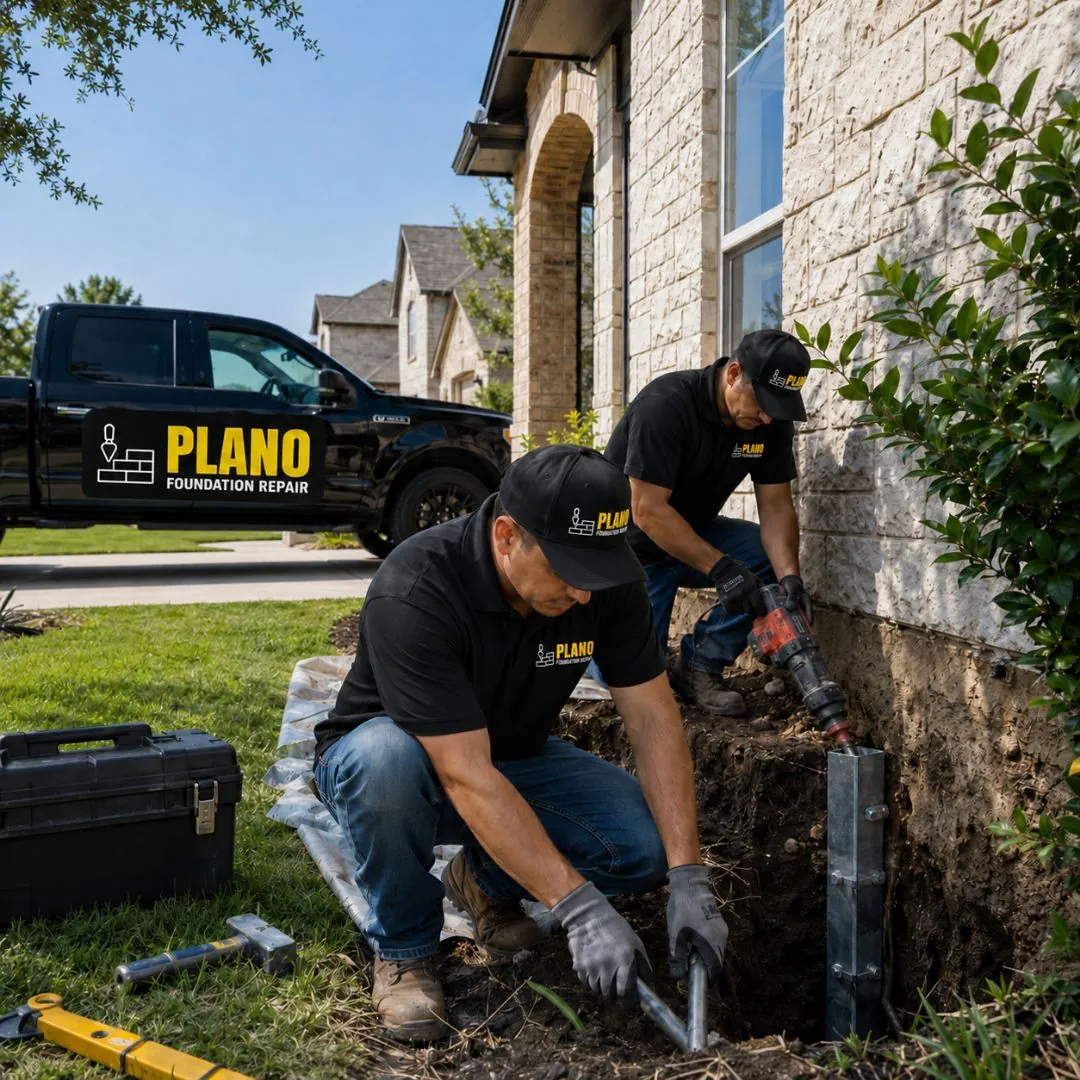
Plano Foundation Repair evaluates foundation symptoms together with the site. We review brickwork, drywall, floors, doors, windows, exposed slab areas, grading, drainage, irrigation, trees, and hardscape. Our services in Frisco include foundation repair, slab repair, inspections, crack repair, drainage correction, and localized soil stabilization. Reach out and we will arrange a property evaluation.
Frisco has the youngest housing stock of anywhere we work, and that changes the conversation almost entirely. Most of the city was built during the explosive growth of the 2000s and 2010s, which means two things matter here that barely come up elsewhere. First, a large share of these homes sit on post-tension slabs, where steel cables run through the concrete under tension. Nobody should cut, core, or drill into that slab without scanning to locate the cables, and a contractor who is casual about it is a contractor to walk away from.
Second, many Frisco homes are still inside a builder structural warranty window, which commonly runs ten years on the foundation. Before paying for repairs out of pocket, it is worth checking whether the original builder warranty still applies and what the claim process requires, because documentation gathered the right way early on is much more useful than a repair invoice presented later.
The speed of the buildout left its own signature. Neighborhoods across Stewart Creek and Panther Creek were graded quickly, and a lot of homes sit partly on engineered fill. Fill that was properly compacted performs fine. Fill that was not shows up as one corner sitting lower than the rest within the first decade. Frisco joined the North Texas Municipal Water District in 2001 and follows the same regional watering stages as its neighbors.
Common in Frisco. Tension cables must be located by scanning before any interior penetration. This constrains how interior support points can be installed.
Foundation coverage often runs ten years from completion. Check the warranty before paying privately, and document the condition carefully from the start.
Where neighborhoods were cut and filled quickly, compaction varies. A single low corner within the first ten years is the classic sign.
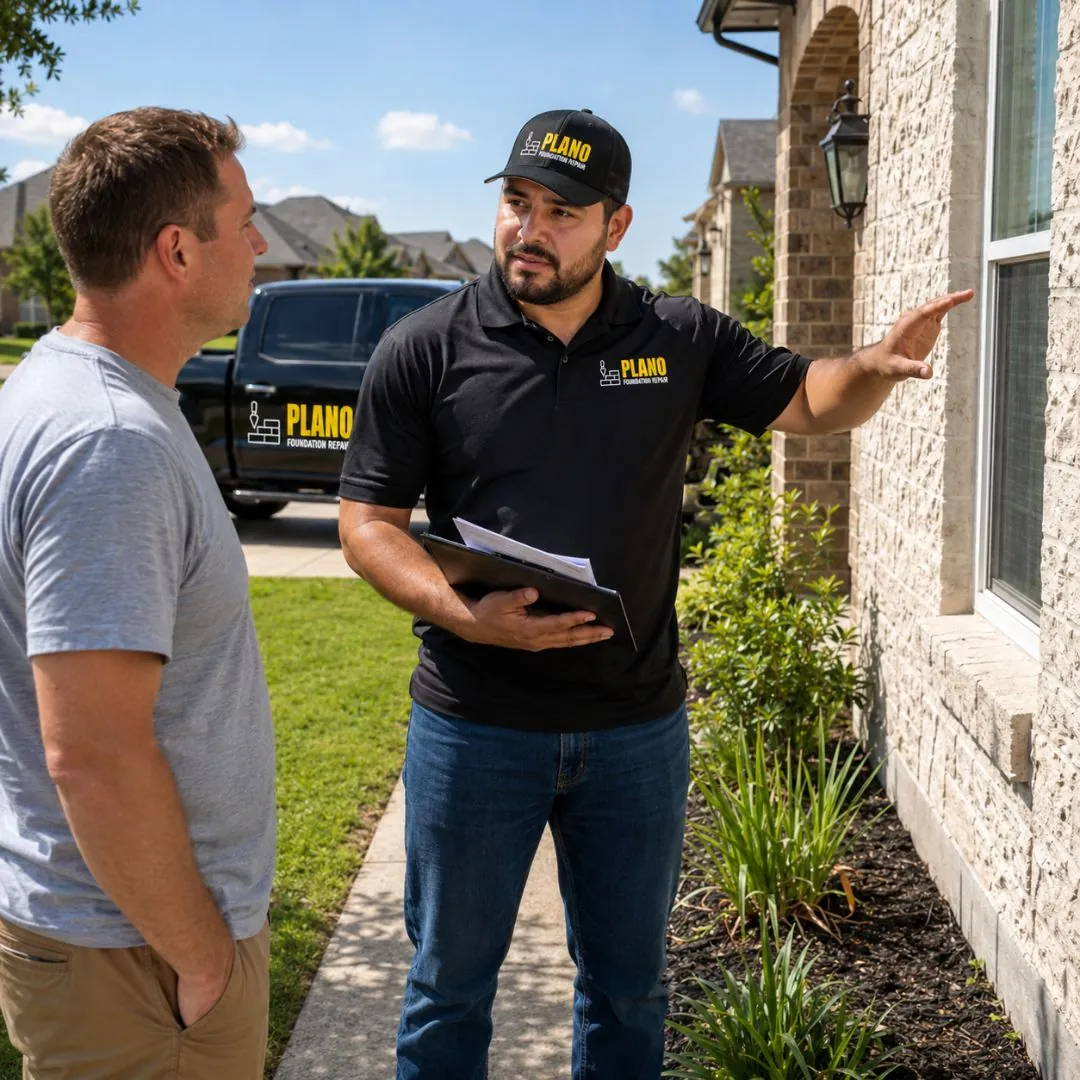
We evaluate recently built and established properties without assuming age alone explains the symptoms.
Nearby construction, altered runoff, added pools, patios, landscaping, and drainage modifications may affect how water moves around a property.
Support locations and adjustment expectations are based on the observed movement pattern and structural conditions.
We explain when grading, downspout changes, drains, erosion control, or monitoring may support the structural plan.
We bring inspections and repair planning to properties throughout Frisco. Contact us to get started.
It is a concrete slab with steel cables running through it under tension, used widely in newer Frisco construction. The cables carry load, so cutting into the slab without locating them first can sever a cable, which is dangerous during the cut and structurally damaging afterward. Any interior work needs the slab scanned first, and that step should appear in the proposal.
Possibly. Structural warranties on the foundation commonly run ten years from completion, and they typically survive a change of ownership. Check the original warranty documents before commissioning private repairs, and consider having an independent engineer document the condition, since a stamped report carries more weight in a warranty claim than a repair estimate.
Two reasons dominate in fast-built areas. Uneven compaction of engineered fill during rapid grading leaves some sections bearing differently from others. And drainage is often the last thing finished on a new build, so grading toward the house and short downspouts are common and easily corrected. Newer does not mean immune on this soil.
Yes. Exterior perimeter piering works essentially the same way, since the work happens outside the slab edge. It is interior support points that require care, because reaching them means penetrating the slab. Scanning locates the cables so points can be placed between them, and where that is not workable, tunneling from outside avoids the issue entirely.
Have cracks, floor changes, or persistent standing water evaluated before the pattern becomes more difficult to understand.
Quick, simple, and no obligation